
Advances in dental materials, digital design, and clinical techniques have given patients more attractive and reliable options for replacing missing teeth. While fixed restorations like dental implants and bridgework are excellent solutions in many cases, removable dentures remain a well-established and flexible way to restore a complete, functional smile.
At the office of Vernon Woods Dental & Implant Center, we create dentures using high-quality materials and careful fabrication methods to achieve a comfortable fit and a natural appearance. Our approach emphasizes facial balance, functional bite, and a finished look that helps you speak, eat, and smile with confidence.
Every denture we design begins with a thorough evaluation of oral health and personal needs. We work with patients to develop a plan that considers lifestyle, long-term oral health, and comfort — so the final result feels as natural and secure as possible.
Losing teeth impacts daily life in a number of ways beyond the visible gap. Missing teeth can make it harder to speak clearly and to chew a variety of foods comfortably, which may affect nutrition and enjoyment of meals. The ripple effects are rarely immediate, but they are cumulative over time.
When teeth are absent, the jawbone and surrounding tissues lose the stimulus they once received from normal biting and chewing. This gradual change can alter the shape of the face, leading to a sunken or aged appearance if left unaddressed. Replacing teeth helps preserve facial support and maintains a healthier oral environment.
Emotional and social effects are also real. Many people report reduced confidence or reluctance to smile after tooth loss. Addressing missing teeth with a restoration that suits both function and appearance can improve everyday comfort and self-assurance.
Dentures are removable prosthetic appliances that sit on the gums and restore the look and function of natural teeth. They are composed of artificial teeth set into a base that mimics gum tissue. Depending on the design, dentures can replace a few missing teeth or an entire dental arch.
Unlike permanently fixed restorations, removable dentures can be taken out for cleaning and overnight rest. This makes it easier to maintain oral hygiene for both the prosthesis and any remaining natural teeth. The ability to remove the appliance also allows the clinician to evaluate the health of the underlying tissues during routine visits.
Dentures are versatile: they can be crafted to prioritize aesthetics, comfort, or durability depending on each patient’s needs. In many cases, modern denture materials and careful design result in lifelike appearance and predictable function.
Selecting the right denture starts with a careful clinical exam. We assess the condition of any remaining teeth, the quality of the jawbone and gums, bite relationships, and facial proportions. These factors guide whether a partial denture, a full denture, or an implant-retained solution is the most appropriate choice.
Partial dentures are designed to replace one or several missing teeth while preserving and working around the teeth that remain. They use clasps or precision attachments to stabilize the prosthesis and prevent unwanted movement or drifting of adjacent teeth.
Complete or full dentures replace all teeth in the upper arch, lower arch, or both. The design and fit are tailored to each patient’s anatomy and functional demands; achieving a comfortable bite and natural appearance requires attention to detail at every step of fabrication.
Full dentures can be delivered in different ways depending on a patient’s dental situation. A conventional full denture is crafted and placed after any required extractions and once the tissues have healed, producing a stable, long-term fit.
Immediate denture
An immediate denture is placed on the same day teeth are removed so the patient does not go without teeth during healing. While this approach preserves appearance and function right away, small adjustments and relines are often needed as the tissues remodel during recovery.
Overdenture
An overdenture gains extra support from remaining natural tooth roots or specially placed attachments on teeth. This strategy can improve retention and preserve bone in areas where roots remain healthy.
Implant-supported denture
Implant-supported options attach a removable or fixed denture to small implants placed in the jaw. This provides significantly greater stability and can restore chewing function more like natural teeth while reducing movement during speech and eating.
Partial dentures come in many designs and materials, from lightweight flexible resins to frameworks with metal bases. The choice depends on the location of the missing teeth, the strength of remaining teeth, and patient preferences for comfort and appearance.
Well-designed partial dentures not only fill gaps but also help maintain proper tooth alignment and bite relationships. They are an effective way to restore function and confidence when natural teeth can be preserved.
Throughout planning and fabrication, our team prioritizes fit, retention, and ease of maintenance to ensure the denture integrates smoothly into daily life.

Designing a successful denture blends careful diagnostics with skilled laboratory work. We begin with a complete review of medical and dental history, diagnostic imaging when needed, and precise impressions or digital scans to capture the oral anatomy accurately.
From there, laboratory technicians and clinicians collaborate on tooth selection, shade, and form to create a prosthesis that complements the patient’s facial features. Try-in appointments allow adjustments to tooth position and bite before the final denture is processed.
Occasionally, preparatory procedures — such as minor reshaping of bone or removal of nonrestorable teeth — are recommended to provide a healthier foundation for the denture. When implants are part of the plan, surgical and restorative phases are coordinated to achieve the best long-term outcome.
Once the denture is delivered, we schedule follow-up visits to evaluate fit, function, and comfort. Small adjustments after insertion are normal and help fine-tune how the denture performs during everyday activities.

Adjusting to a new denture is a process. During the first days and weeks, you may notice changes in saliva flow, speech patterns, and chewing dynamics. These are normal responses as your mouth becomes accustomed to the appliance, and they typically resolve with time and practice.
We recommend starting with soft, bite-sized foods and chewing slowly on both sides to distribute pressure evenly. Reading aloud or repeating familiar phrases can speed adaptation to speech changes. If a sore spot develops, wearing the denture for a short period before your adjustment appointment helps us identify the exact pressure point.
Caring for dentures involves daily cleaning, rinsing after meals, and soaking overnight to keep the prosthesis and mouth healthy. Brush any remaining natural teeth and the soft tissues to reduce plaque buildup and maintain gum health. Removing your denture at night gives oral tissues a restorative break.
Added stability options
Where needed, adhesives, attachments, or implant support can improve retention and comfort for full dentures. Your clinician will recommend the most appropriate stabilization method based on anatomy and lifestyle needs.
Follow-up and preventive care
Routine checkups let us monitor tissue health, the fit of the denture, and any changes in oral structures. These visits are an opportunity to professionally clean the prosthesis and to address adjustments or repairs.
When relines or repairs are necessary
As the jaw and gum tissues remodel over time, a denture may lose some of its original fit. Relining the denture restores close contact with the tissues, improving comfort and function. Repairs and adjustments are often straightforward when handled promptly.
At Vernon Woods Dental & Implant Center, our priority is a durable, comfortable outcome that supports your oral health and quality of life. If you have more questions about dentures or would like to discuss which option best suits you, please contact us for more information.


Dentures are removable prosthetic appliances that replace missing teeth and the surrounding gum tissue to restore appearance and basic function. They consist of artificial teeth set into a base that fits over the gums and transfers chewing forces across the supporting tissues. Modern dentures are crafted from durable materials and designed to balance aesthetics with functional needs.
Removable dentures can be taken out for cleaning and overnight rest, which helps maintain oral hygiene for both the prosthesis and any remaining natural teeth. The fit and stability of a denture depend on careful impressions or digital scans and precise fabrication to match a patient’s anatomy. Regular follow-up allows clinicians to monitor fit and make adjustments as tissues remodel over time.
There are several denture types to address different needs, including partial dentures that replace one or more missing teeth, complete dentures that restore an entire upper or lower arch, and immediate dentures placed on the day of extractions. Specialized options include overdentures that gain support from remaining tooth roots and implant-supported dentures that attach to dental implants for added stability. Material and design choices vary from flexible resins to traditional acrylic and metal frameworks depending on comfort and durability goals.
Partial dentures often use clasps or precision attachments to integrate with existing teeth and help prevent unwanted shifting, while full dentures rely on tissue contact, suction, or attachments for retention. Immediate dentures provide an immediate cosmetic and functional solution during healing but typically require relines as tissues change. Implant-supported designs can be removable or fixed and generally offer greater chewing efficiency and reduced movement during speech and eating.
Candidacy for dentures is determined through a comprehensive clinical exam that evaluates the condition of remaining teeth, gum health, jawbone volume, bite relationships, and overall medical history. Patients with healthy oral tissues or those whose remaining teeth are nonrestorable may be appropriate candidates for partial or complete dentures after any necessary preparatory care. The clinician also considers lifestyle needs and functional goals to recommend the best prosthetic option.
When jawbone or tissue quality is a concern, alternative or adjunctive treatments such as overdentures or implant-supported solutions may be discussed to improve retention and preserve bone. A personalized treatment plan outlines preparatory procedures, timelines, and expected outcomes to ensure the denture meets both functional and cosmetic objectives. Your dentist will explain options and coordinate any surgical or restorative phases if implants or extractions are required.
The denture process begins with a thorough assessment, diagnostic imaging when necessary, and precise impressions or digital scans to capture the oral anatomy. Clinicians and laboratory technicians collaborate on tooth selection, shade, and arrangement, followed by try-in appointments that allow patients to confirm tooth position and bite before final processing. Final delivery includes evaluation of fit and function with adjustments made as needed to optimize comfort.
Preparatory treatments such as extractions, minor bone reshaping, or periodontal therapy may be performed before final denture fabrication to create a healthy foundation. Immediate or transitional dentures can be provided when teeth are removed so patients do not go without teeth during healing, but these often require relines as tissues remodel. At Vernon Woods Dental & Implant Center the team schedules follow-up visits to fine-tune fit and address any adaptation concerns.
It is also important to brush and floss any remaining natural teeth and to clean the gums, tongue, and palate with a soft toothbrush to promote tissue health. Remove dentures before going to bed to give oral tissues a restorative break and reduce the risk of sore spots or inflammation. Routine dental checkups allow the clinician to professionally clean the prosthesis, inspect tissue health, and perform any needed adjustments or repairs.
Adapting to new dentures generally takes days to a few weeks, though individual experience varies based on the type of denture and the patient’s oral anatomy. Early changes such as increased saliva flow, minor speech alterations, and differences in chewing feel are common and typically improve with practice and gradual dietary adjustments. Starting with soft, bite-sized foods and chewing slowly on both sides helps distribute pressure evenly during the adaptation period.
Speech often improves with exercises like reading aloud or repeating difficult words until tongue and lips learn the new contours. If sore spots develop, brief periods of wear followed by an adjustment appointment help the clinician pinpoint pressure areas. Persistent discomfort, difficulty eating, or speaking concerns should be evaluated promptly so necessary adjustments can be made.
Yes, dentures can be stabilized or retained using dental implants, which provide secure anchor points in the jaw and significantly reduce denture movement during function. Implant-supported dentures can be removable for easy cleaning or fixed in place for a more permanent restoration, improving biting force and patient confidence with speech and eating. This approach also helps preserve jawbone by restoring functional stimulation that would otherwise be lost after tooth removal.
The number and placement of implants depend on the arch being restored and the patient’s bone quality, and implants are planned with diagnostic imaging and clinical coordination between surgical and restorative phases. Implant-retained solutions often require an initial healing period, after which attachments or bars are connected to support the denture. Your dentist will review candidacy and expected outcomes to determine whether an implant option is appropriate.
Relines are recommended when a denture no longer fits closely against the tissues due to natural bone and gum changes, while repairs address breaks, cracked teeth, or damaged clasps that affect function. Because oral anatomy shifts gradually over time, periodic relines restore proper fit and comfort and can often be completed chairside or in the laboratory depending on the situation. Prompt attention to cracks, worn teeth, or loose components prevents further damage and maintains oral health.
Replacement becomes necessary when a denture shows extensive wear, when repeated repairs no longer restore satisfactory function, or when tissue changes make an updated design the safer long-term option. Regular dental visits allow the clinician to monitor fit, assess tissue health, and recommend relines or replacement before problems progress. Addressing issues early ensures better comfort, chewing efficiency, and prosthesis longevity.
Replacing missing teeth with a well-designed denture restores facial support and can prevent the sunken or aged appearance that sometimes accompanies significant tooth loss. By reestablishing proper tooth height and lip support, dentures help maintain more natural facial proportions and improve chewing and speech function. However, conventional removable dentures do not stop bone resorption entirely because they rest on the tissues rather than replacing tooth roots.
For patients concerned about preserving jawbone, options such as overdentures or implant-supported prostheses offer improved stimulation to the underlying bone and can slow resorption. During your evaluation at Vernon Woods Dental & Implant Center clinicians assess facial balance and bone health to recommend the restorative approach that best supports both appearance and long-term oral structure. A tailored plan helps protect your oral health while restoring a confident smile.
Follow-up visits focus on evaluating fit, checking for sore spots, refining occlusion, and ensuring the denture performs well during speech and eating. Early appointments typically occur within the first few days to weeks after delivery, with additional checks scheduled as needed to monitor tissue changes and make relines or small adjustments. These visits also allow professional cleaning of the prosthesis and inspection of remaining natural teeth and soft tissues.
Long-term preventative visits let the clinician track bone and gum health, address maintenance or repairs, and plan for relines or replacement as tissues remodel. Bringing the denture to appointments helps the team assess wear patterns and retention and to recommend stability options such as adhesives or implant support if indicated. Regular follow-up care is key to maintaining comfort, function, and oral health over time.
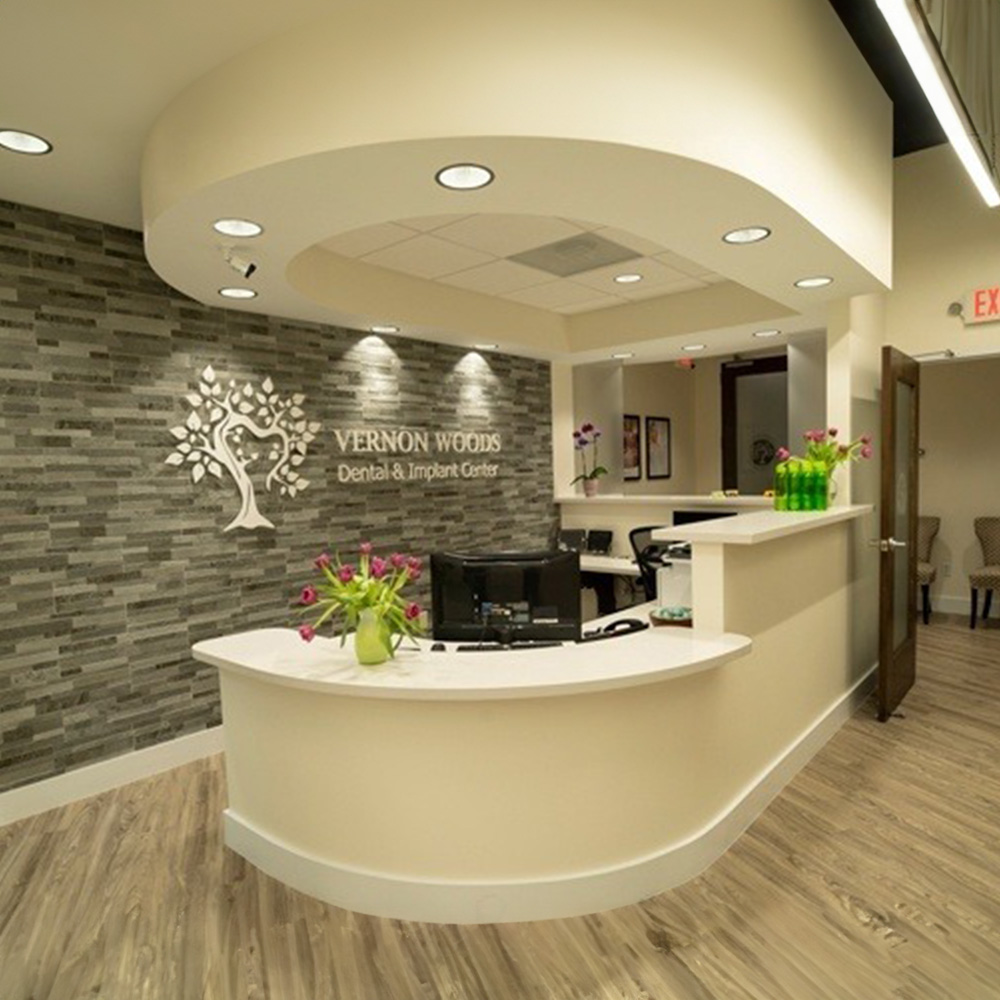
Ready to schedule your first visit and to join the Vernon Woods Dental & Implant Center family?
Scheduling your visit or getting answers to your questions is simple. The helpful team at Vernon Woods Dental & Implant Center is here to assist you! We can easily help you book appointments, explain treatment details, and address any concerns you have. Connect with us however you prefer—by phone or our quick online form. Don't delay your smile goals; contact us today and experience the comfort and confidence that personalized dental care provides.
Back to top
